

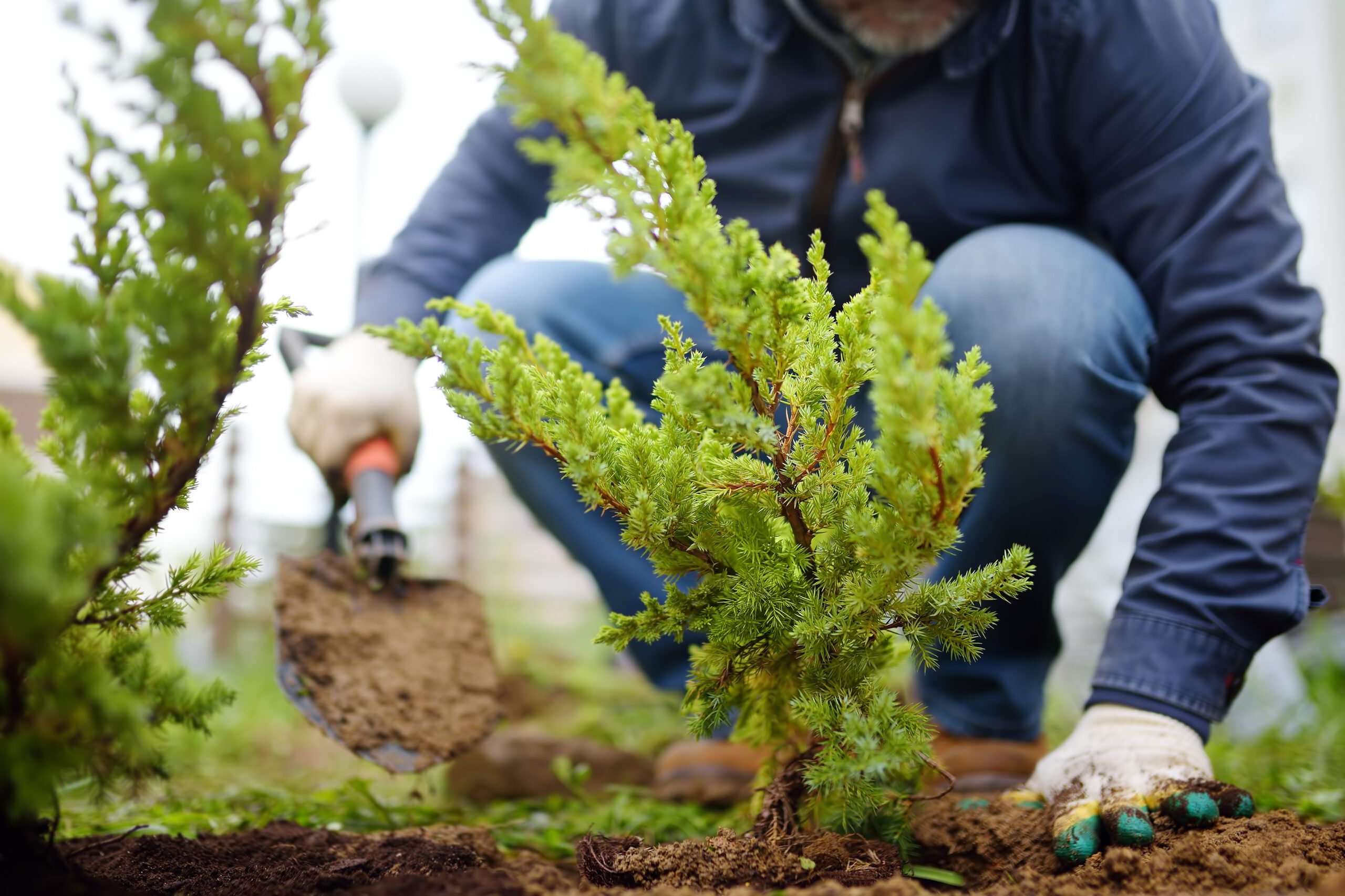
You can move a tree anywhere, but will it grow there?
Relocating a tree is only half the job. The other half, the one that often goes overlooked, is what you’re replanting it into. Soil isn’t just dirt. It’s a living ecosystem that fuels the tree’s ability to root, absorb nutrients, and stand strong for decades.
Without healthy soil, even the most seamless relocation can fail. That’s why at Environmental Design, Inc., we treat soil preparation with the same care and precision as the move. Thriving trees don’t just need space; they need support.
Why soil health is critical after tree relocation
When a tree is relocated, its root system is inevitably reduced. That means it needs to rebuild strength quickly. The new soil it’s planted into must be capable of supporting rapid root regrowth and supplying consistent water, oxygen, and nutrients.
If the soil is too compacted, poorly drained, nutrient-deficient, or biologically inactive, the tree struggles to reestablish. In worst cases, it dies within the first year. Understanding soil health upfront protects your investment and gives the tree the best chance at long-term success.
Step one: test before you plant
Before we move any tree, we evaluate the destination soil. This starts with a comprehensive soil test, which tells us:
- pH
- Texture
- Nutrient levels
- Organic matter
- Drainage and compaction
These results guide our amendment strategy. No guesswork, no one-size-fits-all solutions.
The role of soil structure and compaction
Healthy soil isn’t just about what’s in it; it’s about how it’s built. Good soil has porosity, which allows air, water, and roots to move freely. Compacted soil suffocates roots and stunts tree growth.
Before planting, we evaluate compaction levels using probes, then break up the soil mechanically or with air spading. We layer in compost to increase organic content and improve root penetration.
Soil amendments: what we add and why
Once we understand what the soil lacks, we customize amendments, such as:
- Compost for nutrients and water retention
- Biochar for microbial activity and structure
- Gypsum for clay-heavy soil
- Lime or sulfur to adjust pH
- Slow-release fertilizer to support regrowth without overstimulating
Our goal is to create a soil environment that mimics what the tree is used to, or better.
Matching species to soil types
Not all trees thrive in all soil types. Some prefer acidic loam, others prefer sandy or mineral-rich substrates.
At Environmental Design, Inc., we assess compatibility before we plant. If the destination soil isn’t a match, we either amend it to suit the tree or guide clients to a more appropriate location.
Drainage: too much or too little can be deadly
Overly wet soils can suffocate roots and cause fungal rot, while dry soils may fail to retain moisture long enough for absorption.
We test percolation rates, evaluate the slope, and analyze stormwater flow. Our drainage solutions may include:
- Raised beds
- French drains
- Grading adjustments
- Subsurface piping
All to ensure a steady, safe moisture level.
Boosting biological activity
Soil health is powered by life. Earthworms, bacteria, fungi, and protozoa all play roles in supporting a tree’s roots.
We activate the soil food web using:
- Compost teas
- Mycorrhizal inoculants
- Organic mulches
- Natural soil conditioners
These organisms break down matter, deliver nutrients, and create space for roots to thrive.
Monitoring post-planting soil performance
Once a tree is replanted, the job isn’t finished. We monitor:
- Soil moisture with in-ground sensors
- Oxygen flow to root zones
- Mulch thickness and quality
- Nutrient levels via seasonal tests
Soil evolves — and our care evolves with it.
Understanding soil horizons and root compatibility
Healthy soil isn’t uniform. Below the surface are horizons: layers with different textures and roles. We focus especially on:
- Topsoil: rich in organic matter and life
- Subsoil: mineral-rich and vital for anchoring roots
- Hardpan: compacted layers that may need breaking
We ensure roots can access the right layers for both immediate support and long-term growth.
Managing soil salinity and contamination risks
In coastal or urban zones, soil may be contaminated with salt, heavy metals, or chemicals — invisible but deadly to young roots.
We test for:
- Sodium and chloride
- Lead, zinc, and arsenic
- pH-linked toxicity risks
Based on results, we may recommend soil replacement, leaching protocols, or engineered root zones with fresh imported topsoil.
Soil microbiomes: the invisible root partners
Tree roots don’t work alone. They partner with a vast underground microbiome — fungi and bacteria that help break down nutrients, defend against pathogens, and communicate environmental changes.
When we replant, we often carry over root-zone soil from the original site to maintain microbial continuity. It’s a subtle but powerful way to give transplanted trees their best chance.
Preparing soil for legacy landscapes
For trees placed in iconic, high-value, or long-term public landscapes, soil preparation becomes part of the design blueprint. We go beyond planting to engineer entire soil systems that support:
- Long-term canopy growth
- Resilient drought response
- Low-maintenance irrigation
- Tree health over generations
Legacy trees deserve legacy soil.
Let’s prepare the ground before we plant the dream
If you’re planning to relocate a tree, don’t forget the ground it’s going into. Contact Environmental Design, Inc. for expert soil assessments, custom amendments, and strategic transplant planning that gives your tree the best possible start.
Visit www.treemover.com to get started.

Recent Comments