

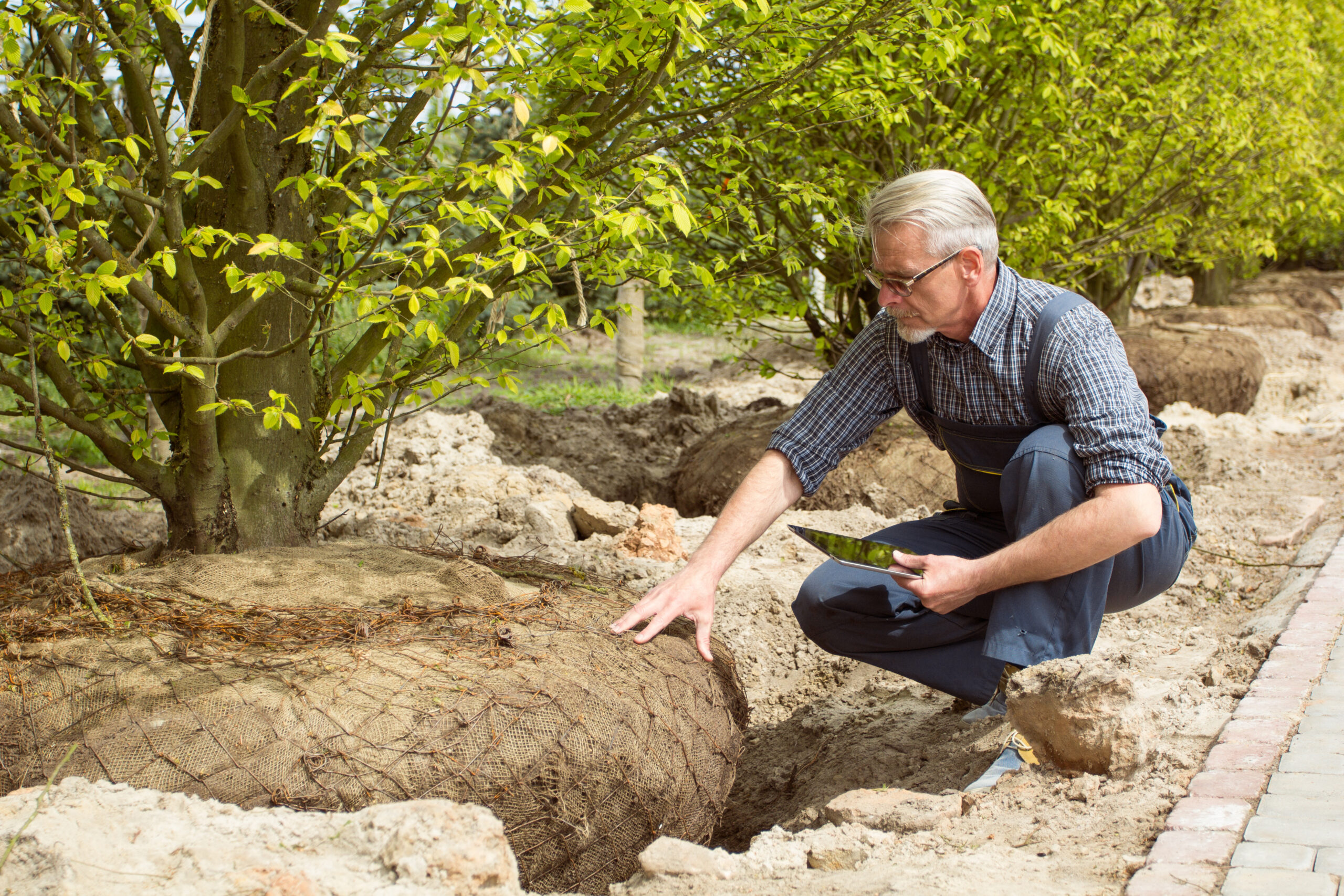
Transplanting trees in extreme weather? It can be done if you do it right.
Moving a mature tree is never a small task. But doing it during the peak of a heatwave or amid a deep freeze? That’s next-level. The risks are higher. The stress on the tree is greater. And yet, sometimes that’s the only option.
Whether dictated by project deadlines, emergency relocations, or environmental shifts, transplanting in extreme conditions requires precise planning, species-specific strategies, and dedicated aftercare. At Environmental Design, Inc., we’ve relocated thousands of trees in every climate imaginable. Here’s what we’ve learned.
Understanding seasonal vulnerabilities
Each season poses unique threats to a transplanted tree. In summer, the intense sun accelerates transpiration, causing water loss faster than roots can replenish it. In winter, frozen soil blocks water uptake entirely and can damage roots that aren’t insulated. Windburn, sunscald, frost heaving — the list goes on. Knowing how trees react seasonally allows us to match technique to conditions.
Transplanting during summer heat
1. Hydrate before, during, and after the move
Start by deep-watering the root zone 24–48 hours before the move. During transit, root balls should be wrapped and misted to maintain humidity. After planting, install soaker hoses or drip irrigation to maintain consistent moisture for the first 90 days.
2. Mulch, but don’t smother
A 3–4 inch mulch layer insulates the root zone and retains soil moisture, but make sure it’s kept away from the trunk flare to prevent rot.
3. Use temporary shading
For trees planted during blazing sun, we often erect 40–60% shade cloth barriers on the southwest side to reduce heat stress.
4. Adjust expectations
Some dieback is inevitable in peak summer. What matters is root establishment. As long as the root system is alive, leaves will bounce back by the next growing season.
Transplanting during freezing conditions
1. Avoid frozen ground if possible
Digging into solid ground damages roots and limits backfill. We monitor soil temps and, if needed, use ground-thawing blankets or heated water to prep the site.
2. Wrap root balls with insulation
We use straw, burlap, or insulation wrap to protect the root ball during transport and hold in ground heat.
3. Use anti-desiccants
Winter air is dry. Trees still lose moisture even when dormant. We apply anti-desiccant sprays to the canopy to reduce evaporation.
4. Backfill with compost-rich soil
Cold-tolerant microbes and well-drained amended soil give roots a better chance of survival during freeze-thaw cycles.
Planning for spring and fall — the sweet spots
Whenever possible, we schedule transplants in spring or fall. Cool air, warm soil, and lower transpiration make these ideal. Spring transplants must be done before bud break. Fall moves should happen before first frost but after leaf drop for deciduous species.
Techniques to stabilize trees post-move
Extreme weather amplifies transplant shock. We use staking, windbreaks, protective fencing, and moisture monitoring for the first year. These aren’t just accessories — they’re critical to establishment.
Emergency relocations: when you don’t have a choice
Sometimes, a tree has to move now — no matter the season. We’ve been called in after floods, construction conflicts, or wildfires. In these cases, we use rapid-response protocols that include mobile hydration tanks, root-zone stabilization kits, and short-term nursery holding when conditions are unworkable on-site.
Species selection: knowing what can handle it
Some trees are inherently more resilient. Oaks, elms, and cypresses tolerate disruption well. Maples, beeches, and pines are more sensitive to seasonal stress. We recommend strategic deferral for these species unless absolutely necessary.
Team training and tools matter
Relocating in extreme weather requires more than grit. Our teams are trained in first-response arboriculture, weather-adaptive tool use, and emergency soil amendments. Our trucks are stocked with irrigation systems, mobile canopies, and ground thaw tools.
Aftercare is non-negotiable
Whether it’s 100°F or 10°F, what happens in the first 6 months post-transplant determines success. We build custom aftercare plans based on season, soil, and species. This includes weekly checks, moisture readings, trunk inspections, and photo reports.
Understanding dormancy and metabolic slowdown
In winter, trees enter dormancy. While this seems like a period of inactivity, it’s actually a strategic shift in energy usage. Understanding dormancy allows us to reduce transplant stress and time moves with minimal metabolic disruption.
Root-to-crown ratio and seasonal pruning
In hot or frozen conditions, balancing root loss with canopy size is vital. We may perform crown thinning or selective limb pruning to reduce transpiration, making it easier for the pruned root system to support the remaining crown.
Using sensors and remote monitoring
We install soil moisture probes, trunk dendrometers, and wireless weather monitors to track how trees respond to relocation. This data guides irrigation adjustments and allows early detection of stress, which is especially important during climate extremes.
Special considerations for evergreens and conifers
Evergreens transpire year-round, even in winter. At Environmental Design, Inc., we never treat them like dormant trees. We provide wind barriers, extra hydration, and anti-desiccants to protect needles from drying out.
Coordinating with contractors and timelines
Extreme-weather transplants often coincide with project deadlines. We collaborate with architects, builders, and landscape planners to sequence tree moves during viable weather windows. This ensures the tree’s health isn’t sacrificed for a deadline.
Microclimate Mapping for Tree Placement
Even within a single site, factors like slope, sun angle, building reflection, and drainage patterns create microclimates. Mapping these zones helps us place trees where they’ll thrive — not just survive — under seasonal stress.
Evaluating Wind Exposure and Creating Windbreaks
Trees freshly transplanted into wind corridors need protection. We assess prevailing wind direction and create temporary windbreaks using fencing, hedgerows, or shade structures to protect fragile bark and prevent desiccation.
Thermal Fluctuations and Tree Physiology
Extreme day-night temperature swings cause cellular damage. We minimize this with mulching, canopy tents, and timed watering that helps buffer the root zone. Understanding each species’ tolerance is key.
Managing Soil Moisture Extremes
We fine-tune irrigation schedules and use compost, perlite, or sand to stabilize moisture in drought-prone or oversaturated soils. Monitoring devices help us maintain ideal hydration ranges even in unpredictable weather.
Insulating the Root Zone Beyond Mulch
For added protection in freezing or scorching conditions, we wrap root zones in insulating blankets or biodegradable sheeting. This traps warmth or reflects heat depending on the challenge.
Staging Tree Moves Over Multiple Seasons
Some relocations benefit from breaking up the process: pre-pruning in fall, root ball prep in winter, and planting in spring. This phased approach reduces overall shock and aligns better with seasonal rhythms.
Using Tree Growth Regulators in Harsh Conditions
In some cases, we apply plant growth regulators to temporarily slow top growth and redirect energy toward root development — a helpful tactic during heatwaves or water scarcity.
Assessing Recovery with Post-Transplant Vital Signs
We track chlorophyll levels, cambium health, and new root tips to measure recovery. These metrics allow us to proactively adjust care instead of reacting to visible decline.
Integrating Trees into Climate-Resilient Landscapes
We use transplanting as an opportunity to place trees into rain gardens, bioswales, and water-smart zones. This creates long-term resilience and turns seasonal stress into a design advantage.
Community Education and Stakeholder Engagement
We involve grounds crews, residents, and volunteers in understanding seasonal risks and tree recovery. Shared knowledge reduces accidental damage and supports stewardship of transplanted trees.
Let’s move trees the right way — no matter the weather
At Environmental Design, Inc., we’ve moved trees in deserts, snowstorms, and everything in between. Every relocation in extreme conditions carries a higher risk — but it also carries a deeper responsibility. Trees are not just aesthetic features — they’re living infrastructure. With the right timing, tools, science, and strategy, even the most challenging seasonal moves can succeed.
Visit www.treemover.com to begin planning your climate-adaptive tree transplant today.

Recent Comments