

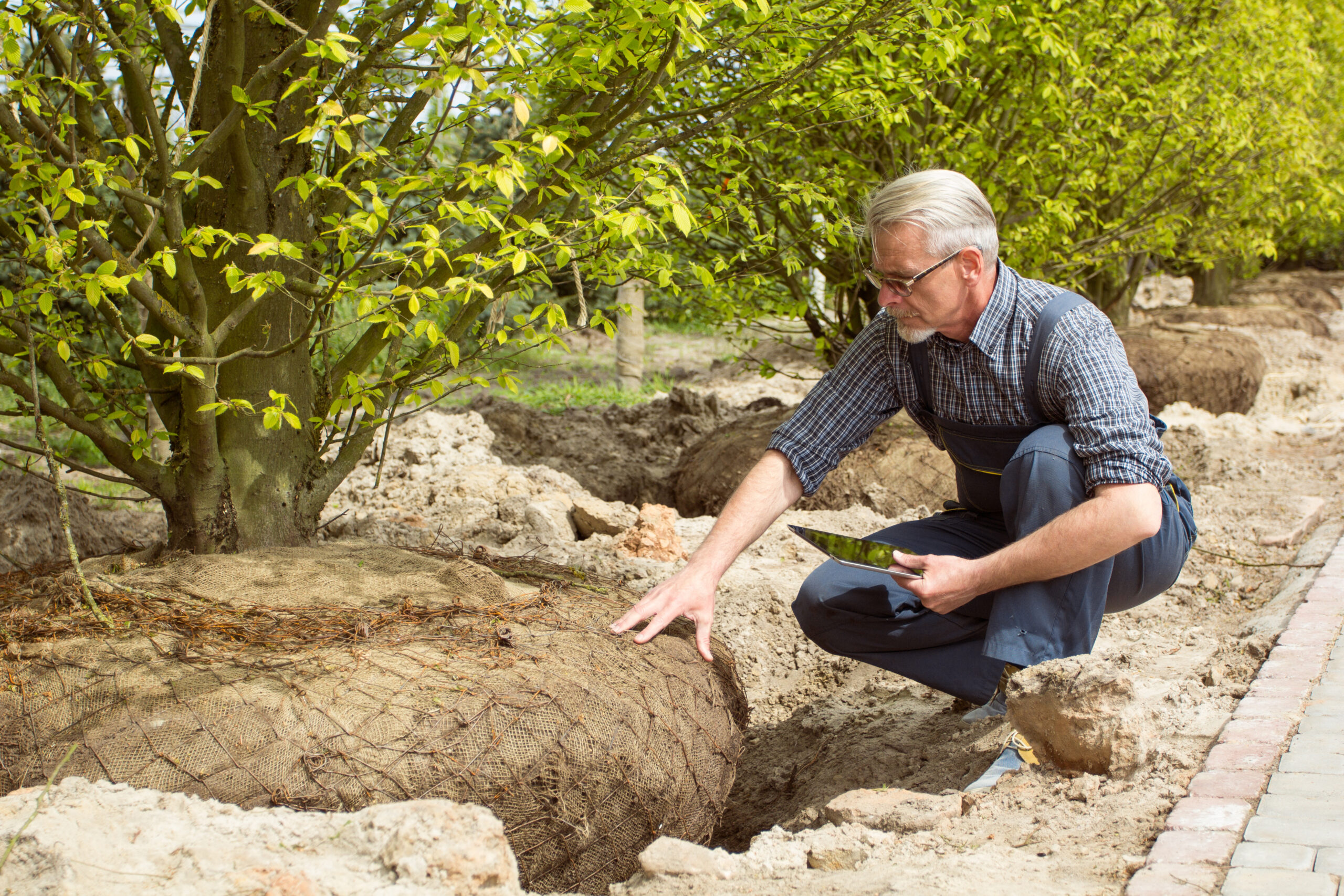
Healthy roots are the key to a successful tree transplant.
Tree relocation isn’t just about lifting something big and putting it somewhere else. It’s about biology, especially what’s happening underground. The health of a relocated tree hinges on its roots and how well they’re prepared in the months leading up to the move. That’s why working with experienced arborists matters. Professionals with specialized knowledge understand exactly how to evaluate, prune, and prepare root systems for success. Root pruning isn’t optional. It’s essential because long-term success begins before the first shovel ever hits the soil.
What is root pruning, and why does it matter?
Root pruning is the strategic cutting of a tree’s roots in advance of relocation. It encourages the growth of new feeder roots closer to the trunk, helping the tree adapt to being moved. Trees with sprawling root systems will lose a significant portion of their structure during relocation. Without root preparation, this shock can weaken or, in severe cases, kill the tree. Root pruning gives the tree time to regenerate, forming a dense, viable root ball that will support it through the move and into its new environment.
Deeper benefits of root pruning
Beyond basic survival, root pruning improves transplant success in several key ways. It strengthens the tree’s ability to absorb nutrients post-move, increases resilience against stress, and enhances long-term stability. Pruned roots grow denser and more fibrous, allowing the tree to anchor itself more effectively after replanting. These benefits are critical in drought-prone areas or regions with heavy soil compaction.
Timing: when and how often to prune
Timing is everything. Typically, root pruning is done 6–12 months before the move. For especially large or sensitive trees, phased root pruning in stages may be employed; cutting part of the root system in fall, then another section in spring. This gradual method allows the tree to recover in stages and reduces overall stress. Climate, species, and soil type all influence scheduling. In hot climates, pruning in cooler months encourages stronger root regeneration with less water loss.
Techniques we use at Environmental Design, Inc.
We don’t just cut roots, we manage root systems. Our techniques include trench-and-backfill, root barrier installation, and custom irrigation systems that direct moisture toward regrowth areas. We also use air excavation for precision pruning around valuable specimens. Our process always includes a post-prune care plan, including mulching, slow-release fertilization, and monitoring for root rot or fungal invasion.
Species-specific pruning considerations
Some species, like oaks, hickories, and elms, respond exceptionally well to root pruning. Others, such as magnolias, pines, and beeches, require more delicate handling and expertise. For example, pine trees have fewer fibrous roots and rely on long taproots, making them less ideal for root pruning and relocation. We evaluate each tree’s physiology to determine the right pruning radius and depth, adjusting our tools and timing to match.
The role of soil and site conditions
Soil type plays a huge role in how roots regenerate. Clay-heavy soils require different techniques than sandy or loamy soils. In poorly draining soils, root pruning may be combined with biochar or compost integration to increase aeration. We also evaluate slope, groundwater level, and microbial activity. The goal: give the pruned roots the best conditions to rebound and extend post-move.
Signs of successful root pruning
After root pruning, we monitor for several indicators of success: new root tip formation, increased fine root density, recovery of canopy vigor, and steady moisture uptake. If a tree begins producing new growth in its upper canopy within months of pruning, it’s a strong sign the root system is responding well. Soil moisture sensors and core samplings help track underground progress.
Common mistakes in DIY root pruning
Root pruning should never be rushed or improvised. Common mistakes include cutting too close to the trunk, pruning during peak growth, over-excavating the root ball, or failing to amend the soil. These can lead to shock, disease, or structural instability. That’s why working with experienced professionals matters. At Environmental Design, Inc., we are able to anticipate complications before they start.
Root pruning in historic and ecological preservation
We’ve used root pruning to save centuries-old oaks on historic estates, preserve landmark trees during construction, and assist conservation organizations restoring native woodlands. It’s not just a technical method — it’s a powerful tool in preserving heritage and ecosystems that can’t be replaced. Proper pruning ensures these trees can survive the transition and continue to serve their communities for decades to come.
Integrating root pruning into phased development plans
For properties undergoing phased construction, such as campus expansions, multi-acre estates, or urban redevelopment, root pruning plays a strategic role in preserving mature trees that could otherwise be casualties of progress. By initiating pruning months or even years in advance, Environmental Design, Inc. helps align biological timelines with construction schedules. This foresight allows developers to maintain landscape continuity, avoid delays, and meet municipal tree preservation requirements, all while protecting valuable plant assets.
Root pruning as part of storm resilience planning
As storms become more frequent and severe, anchoring a tree properly becomes even more critical. Trees with shallow, sprawling roots are at higher risk of windthrow, especially after being disturbed. Strategic root pruning encourages the development of a tighter, deeper root system that increases post-relocation stability and reduces the chance of failure during high winds. For clients in hurricane zones, flood-prone regions, or drought-affected areas, we design pruning plans that contribute directly to a tree’s ability to endure future extremes.
Supporting biodiversity through smart tree relocation
Root pruning isn’t just about tree survival but ecosystem stewardship. Mature trees support countless organisms: birds, insects, fungi, and understory plants. When we preserve these trees through thoughtful relocation and root prep, we’re preserving habitats and biodiversity at the same time. Environmental Design, Inc. frequently partners with ecological consultants and land trusts to relocate trees in a way that supports wildlife corridors, native pollinators, and woodland regeneration efforts.
Final thoughts: preparation is preservation
A successful tree relocation starts months in advance. Root pruning may be invisible at first glance, but it’s foundational to transplant health. It gives the tree a chance to reset, rebuild, and root with confidence, no matter how far it’s going. At Environmental Design, Inc., we treat this step with the care and attention it deserves.
Let’s prepare your trees for what’s next
Whether you’re preparing a tree for construction, conservation, or a new phase of your landscape, let’s make sure it has the roots to thrive. Reach out to Environmental Design, Inc. today and schedule a consultation for root pruning and transplant preparation that protects your investment and preserves what matters.

Recent Comments