
During a course renovation at Pebble Beach Golf Links, a 90-year-old Monterey Cypress stood directly in the path of planned construction. The options were the same ones any developer faces: build around it, remove it, or relocate it. They relocated it.
The reasoning was not sentimental. The presence of that cypress, its canopy, its scale, and its immediate visual authority, was irreplaceable. No nursery stock could have stood in its place. The relocation was made possible by Environmental Design’s ArborLift® technology, and the decision made sense on every level.
That’s the story of specimen trees in a single example. To understand why they command the attention and the investment they do, you have to understand what they actually are.
What Qualifies as a Specimen Tree
The term “specimen tree” is used loosely in landscape and horticulture contexts, but it has a specific meaning in professional practice. A specimen tree is one that possesses exceptional qualities that distinguish it from the surrounding landscape, qualities that make it worthy of singular attention and placement.
Those qualities typically include some combination of:
- Scale: A trunk diameter, canopy spread, or overall height that represents decades of growth and cannot be replicated quickly
- Form: An unusually well-developed structure, symmetrical, architecturally interesting, or dramatically branched in ways that younger trees haven’t developed
- Health: Vigorous, disease-free condition that makes relocation and establishment realistic
- Species value: Some species are inherently more valued for their seasonal characteristics, longevity, or ecological function
- Rarity: Specimens of a species or form that are uncommonly available in the market
Environmental Design grows and sources specimen trees starting at 4-inch caliper, with large specimens classified at 10 inches or larger. But the trees most associated with the specimen designation in the field are mature trees measured by trunk diameter, and it is at that scale, trees with diameters that represent 40, 60, or 80 years of growth, where the distinction between a large tree and a specimen becomes impossible to miss.
The Ecological Value That’s Often Overlooked
The financial value of a specimen tree is easier to quantify than its ecological value, but the ecological value is no less real.
A mature tree provides stormwater interception, air quality improvement, urban heat island mitigation, and habitat function at a scale that no newly planted tree can approach. The USDA Forest Service’s i-Tree tools calculate the annual economic value of urban tree services, and mature trees consistently produce returns that dwarf their acquisition cost when measured against the cost of replacing their environmental functions artificially.
For developers operating under green building standards, stormwater management requirements, or urban forestry ordinances, a relocated specimen tree can fulfill compliance requirements that would otherwise require expensive infrastructure. The tree earns its keep in ways that don’t show up on the landscape budget line.
The Aesthetic Value That Changes a Project
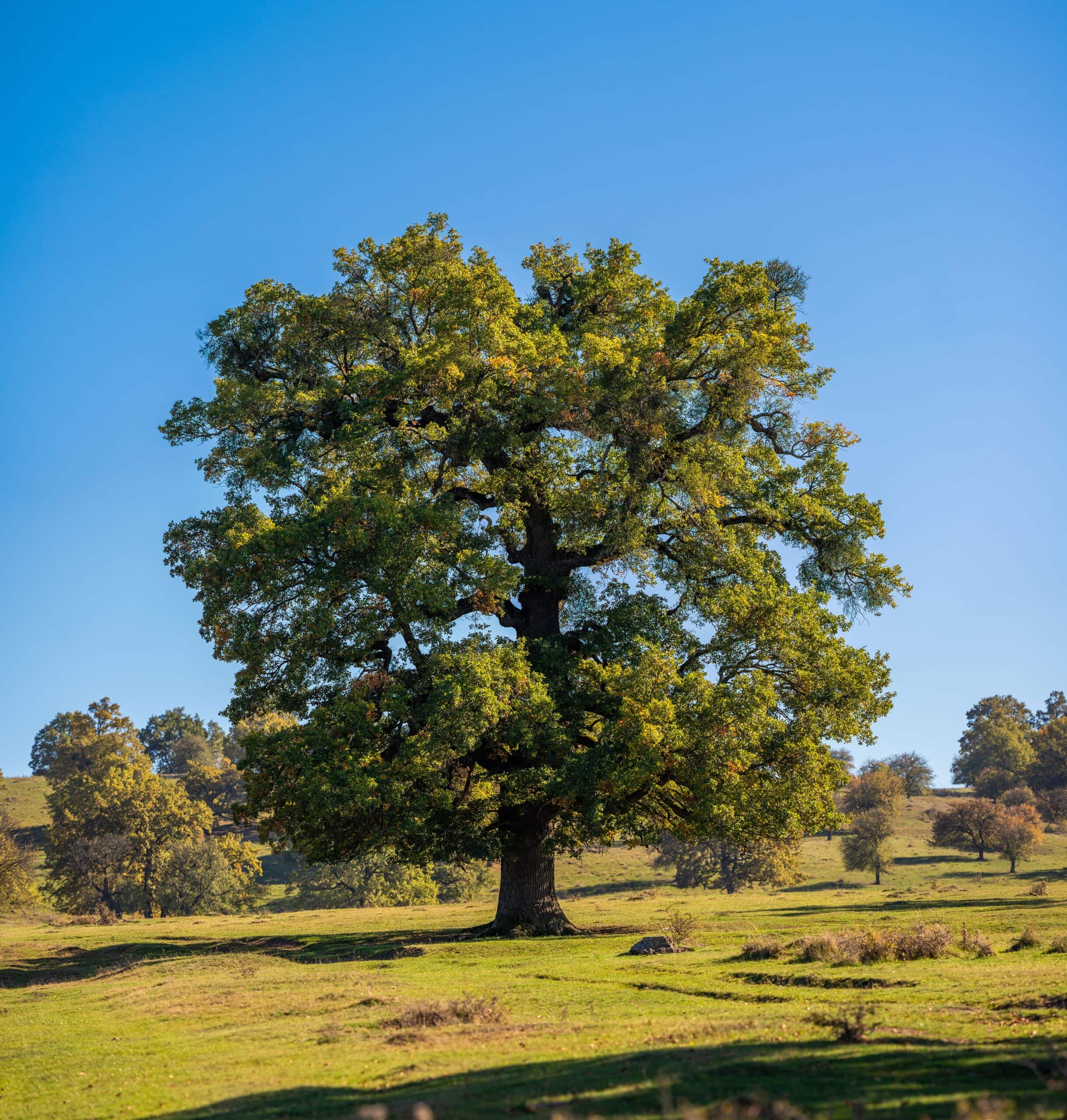
There is something a 60-year-old oak does to a space that a 6-year-old oak simply cannot do. It creates immediate presence. It signals permanence. It communicates that a place has been here long enough to have a history.
For luxury residential developments, this matters enormously. Buyers at the top of the market are not just purchasing square footage, they’re purchasing a sense of place. A mature canopy over a motor court, a specimen tree anchoring a garden entry, a row of established live oaks framing a driveway: these elements create the visual and psychological experience that differentiates a premium property from a comparable one.
Research from the University of Florida IFAS Extension on tree appraisal and property values has documented the premium that mature trees add to residential properties, with increases in the range of 10 to 15 percent commonly cited, and the effect is most pronounced at the upper end of the market, where buyers have the means to act on their preferences and the sophistication to recognize quality.
Why Relocation Changes the Calculus
For much of history, the choice with a specimen tree in a construction footprint was binary: build around it or remove it. Modern relocation technology has added a third option that frequently makes the most financial sense.
Environmental Design, Inc. uses ArborLift® technology to relocate specimen trees that would otherwise be lost. The ArborLift® system is configurable, with the number of airbags and supporting infrastructure scaled to the tree, which means there is no fixed weight ceiling on what can be moved. EDI has relocated trees weighing more than 1.5 million pounds. The process begins long before the tree is touched: root pruning is performed months in advance to encourage the development of a compact root system that will survive transplanting. The move itself is precisely engineered, and post-relocation care is provided to support establishment.
Survival rates for properly relocated specimen trees are high when the process is handled by experienced professionals. A tree that took 60 years to grow doesn’t have to be sacrificed because a building envelope has changed.
The Market for Specimen Trees
There is a market for specimen trees that is entirely separate from the conventional nursery trade. Developers and landscape architects working on significant projects, golf courses, resorts, and institutional campuses regularly seek out mature specimens that can provide immediate visual impact.
Environmental Design, Inc. operates in this market, sourcing, evaluating, relocating, and installing specimen trees for projects where the standard nursery catalog isn’t adequate to the ambition of the design.
The question isn’t whether specimen trees are worth the investment. For the right project, the question is whether you can afford not to have them.
When to Contact Environmental Design
If your project involves a specimen tree in a construction zone, a landscape design that requires immediate scale and presence, a site with existing mature trees worth preserving, or a development where the tree canopy is part of the value proposition, Environmental Design, Inc. is the right conversation to have early on.
The earlier specimen trees are incorporated into project planning, the more options are available. Decisions made late, under construction pressure, are almost always more expensive and less satisfying than decisions made during the design phase.
Contact us to discuss your project and what’s possible.

Recent Comments