EDI In The Press: Monterey Cypress Transplanted at Pebble Beach
Protecting par: Pebble Beach returns 67-foot cypress tree to 18th hole Golf Course News, July 2002 by Saunders, Doug
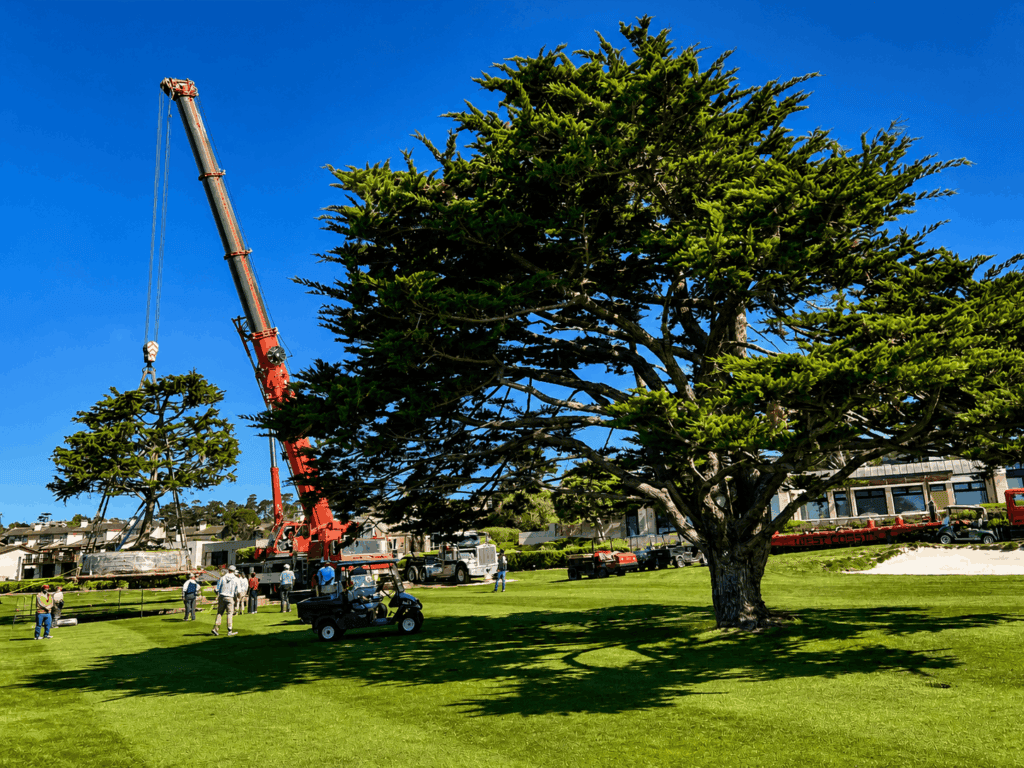
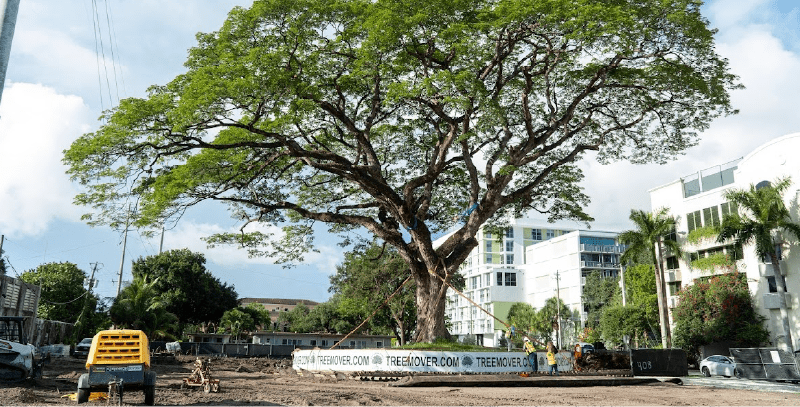
MONTEREY, Calif. - It can only be described as the largest loose impediment imaginable. As players made their way up the 18th hole at Pebble Beach Golf Links in May, the sight of a 67-foot cypress tree suspended above the ground by massive red steel beams simply added to the awesome view of the Pacific Ocean on this, one of the most famous finishing holes in all of golf.
As the winches began to lower the massive tree, with its 30-foot diameter and five-foot thick root ball into its new home, R.J. Harper, the director of golf at Pebble Beach, breathed a sigh of relief. It took a year of planning and coordination to find a way to replace the century-old Monterey pine that had stood near the 18th green until succumbing to lightning and disease last fall.
"Even before we had to take the tree down last fall we began to consider replacing it," said Harper. "Last year during the AT&T Pro-Am it was obvious that the tree played a crucial role in the strategy of the hole. Without the limbs hanging near the green a player could just approach the hole from the right side and not worry about the bunkers and ocean on the left. The hole played about a stroke easier."
After consulting with PGA Tour players Pebble Beach executives decided to replace the tree and Harper set out on his yearlong quest through the Del Monte Forest in search of the perfect replacement.
"We looked at old photos and had measurements of the old tree as we searched the forest, but getting a large tree to the course would have been difficult. We then turned our search to around the golf course and finally settled on this cypress that bordered the first hole," Harper explained.
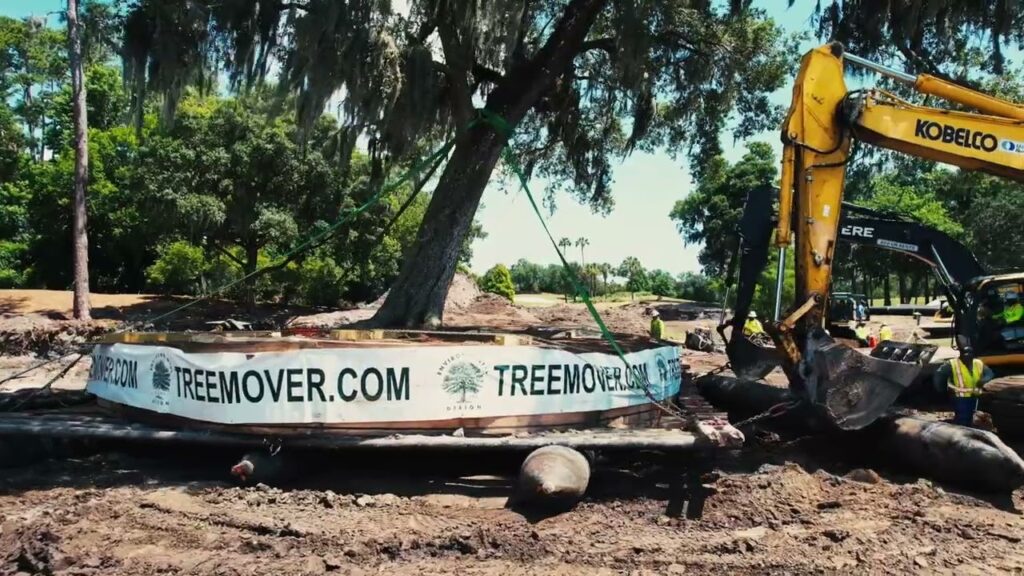
But finding the right tree was only the beginning. To move and transplant the tree, Harper brought in Environmental Design, alarge tree specialist based in Houston. Lead engineer Tom Cox helped develop the special techniques that allowed for the uprooting, transportation and placement of this huge tree.
The hope was to complete the work in three days and do it while play continued, as the $350 rounds at Pebble Beach would be vital in funding the estimated $300,000 transplanting cost.
"We began by determining the exact orientation for the new tree through compass settings, GPS positioning and careful surveying to pinpoint the exact location," said Cox. "The orientation is important in order to load the tree on the trailer in the proper direction."
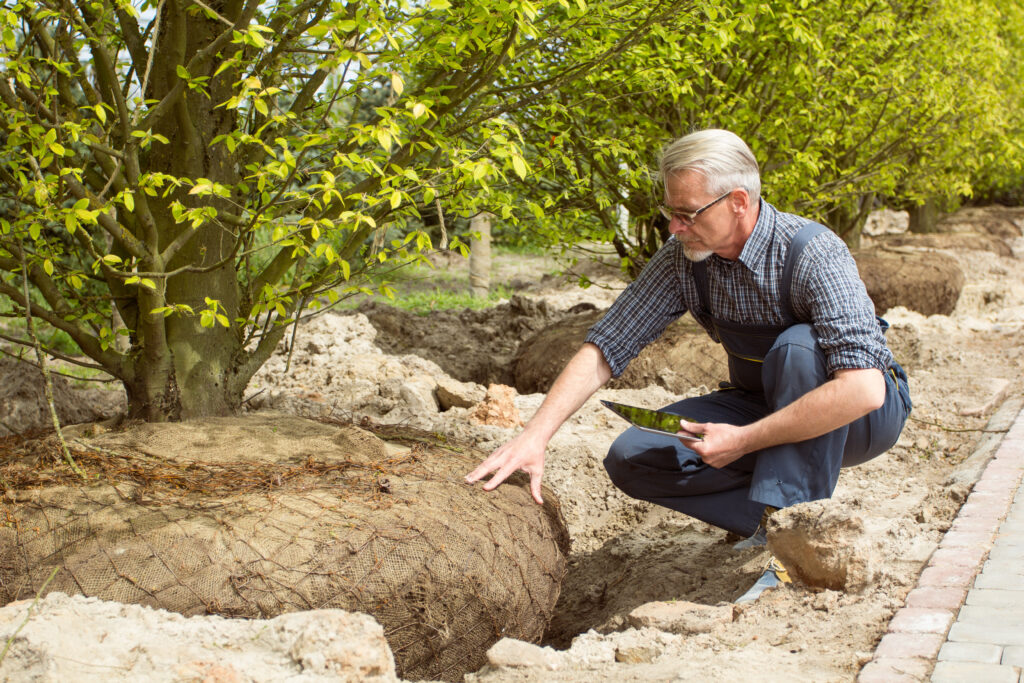
Four months before the move Environmental Design crews dug around the tree to prune the roots. Two months in advance a burlap and wire mesh girdle was installed, and the final digging to ready the tree was completed a few days before movement.
The final step involved driving seven-inch drilling stock under the tree to create a steel bed to carry it. After two days of preparation the tree was lifted by hydraulic jacks and loaded onto a 48-wheel Goldhofer trailer provided by Sheedy Crane and Rigging of San Francisco. But since the 465,000-- pound tree's rootball was larger than anticipated, an 80-wheel self-leveling trailer had to be used.
Once the tree was loaded the next challenge was to drive it to the new location more than a mile away. The trailer was hauled and pushed by massive tractors across a plywood roadway that was created by Pebble Beach employees who continually shuffled sheets ahead of the tree. It took more than five hours to make the journey.
"I have moved bigger things but I have never done a job in such a pristine setting. I was really worried that we would tear up the grass, but the waiters, caddies, and course workers who pitched in made all the difference," said Guy Tunnell of Sheedy Crane and Rigging.
With the tree in the new location, getting it into the hole took some effort. Crews had created a 10 percent grade roadway in order to drive the trailer down into the ground so that the tree would sit at the proper elevation. The sandy soil was softer than anticipated and combination of trucks and tractors had to drag the trailer into place.
Throughout the commotion play continued. A foursome of players from Australia, who had made arrangements to play on this day a year ago, were enthralled by the activity.
"I never thought I would have to drive around a crane on one and putt out on 18 next to tractor trailer truck, but it didn't bother us in the slightest. To be honest we found this all very exciting" one player said.
After positioning the tree, the job of returning the golf course to optimum playing conditions fell into the hands of the Pebble Beach crew under the supervision of superintendent Tom Huesgen. Crews had stockpiled soil removed from the first hole location in order to backfill the tree with compatible soil. Crews had to repair surface damage on the first and 18th fairways and then compact and grade the areas around the tree to prep for resodding. The bunker between the tree and the 18th green will also be rebuilt. Support cables will be on the tree for the next two years to allow the roots to take hold. Huesgen figured to have the areas open to play within a week.
"To be honest, I expected more damage to the fairways from the moving of the tree. There were a few glitches along the way, but that always happens in construction projects. This was one of the most overwhelming projects we have done here at Pebble, and one of the most satisfying," Huesgen said.