EDI In The Press: World Trade Center - A Living Memorial


WORLD TRADE CENTER A Living Memorial Nov. 20, 2006, 11:56PM By ANASTASIA USTINOVA Copyright 2006 Houston Chronicle

Come Sept. 11, 2009, when the ribbon is cut on the World Trade Center Memorial in New York, the families of the victims, dignitaries and officials will be standing under trees taken there by a Houston company.

Environmental Design has landed one of the most important contracts in its 30-year history, said company founder Tom Cox, who was hired to find and bring hundreds of trees to the memorial site dedicated to victims of terrorist attacks.

"To me, it's the culmination of a life's work," Cox said. "Out of all the jobs we could get, nothing has more emotional value than that." Over the years, Cox's company has moved thousands of trees in the Houston area and nationwide with the help of an array of tree-transplant equipment that has gained international attention.

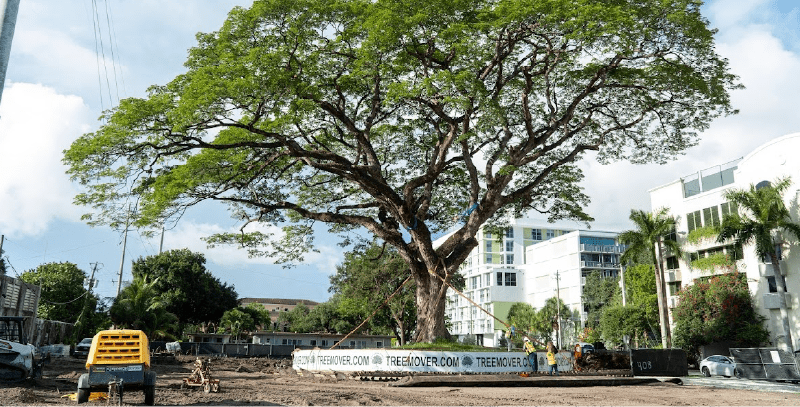
Recently, he moved a 30-foot tall sycamore fig tree with a 7.5-foot trunk diameter in Holon, Israel.

The company's Rolodex of clients includes Lance Armstrong, Kevin Costner, Francis Ford Coppola and Las Vegas developer Steve Wynn, to name a few.

Cox said in the age of instant gratification, when people want immediate results, his services come handy. "We don't want to plant a little tree and wait for it to be something that our grandkids can use," Cox said. "We want the tree we can have the picnic under day one." Cox's methods and equipment have been used in numerous worldwide landscaping projects.

Local projects included BMC Software's complex, Exxon Mobil's new Upstream University and Oak Park at Westchase  all of which has helped his company maintain a 25 percent annual growth rate.

The company also helped move hundreds of oaks in The Woodlands' Eastshore development. "We wanted to create an ambience of an old-looking neighborhood," said Bill Kendrick, director of landscape management for The Woodlands Development Co. "And it has an immediate impact on people who we try to relocate here."

Patented equipment

The company moves trees with a variety of hydraulic tree spades, designed and patented by Cox. The 14-foot spade, for example, is capable of lifting and transporting trees in excess of 36 inches in diameter. The machine surrounds the tree with 10 blades and digs a root ball that can weigh up to 80,000 pounds, which is then ready to be moved to the new location.

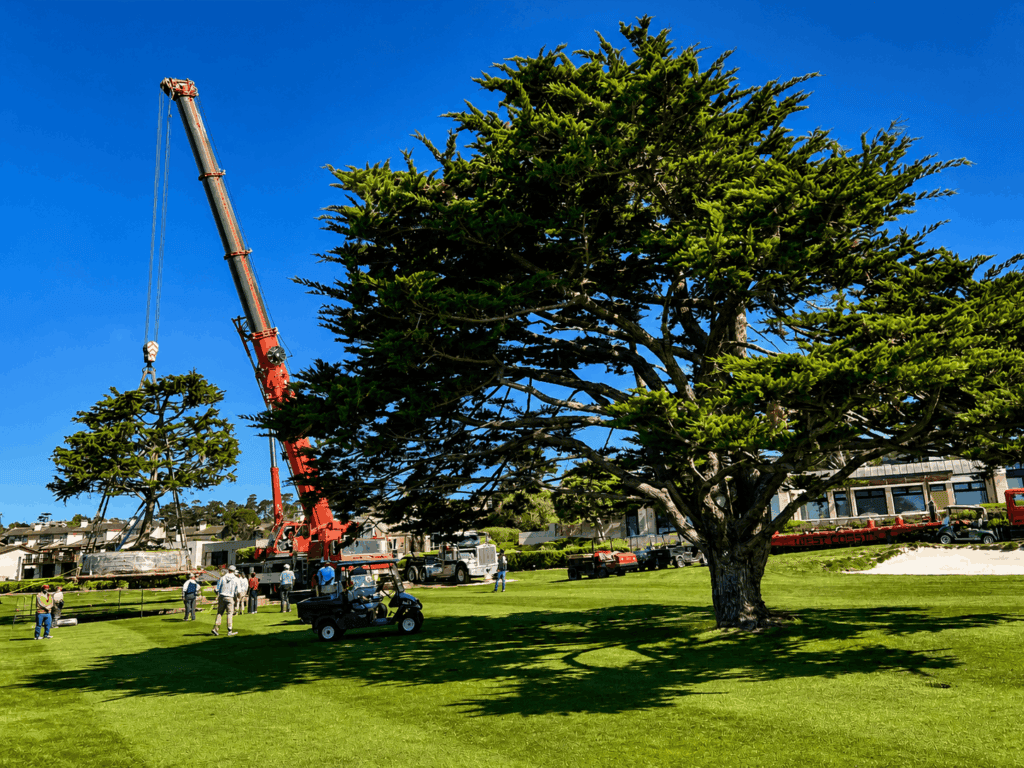
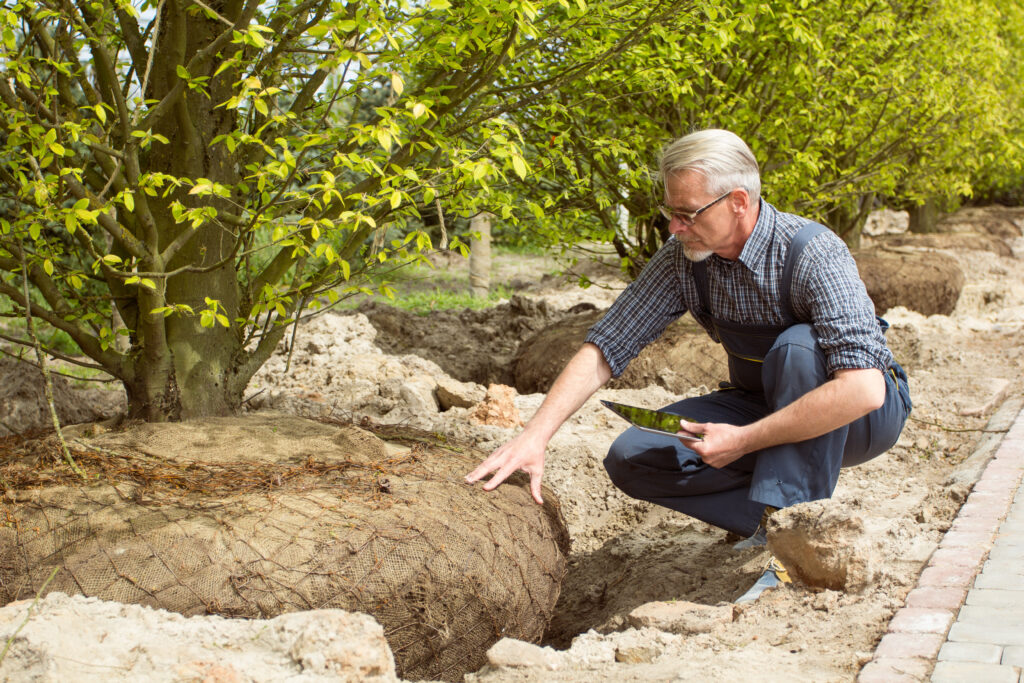
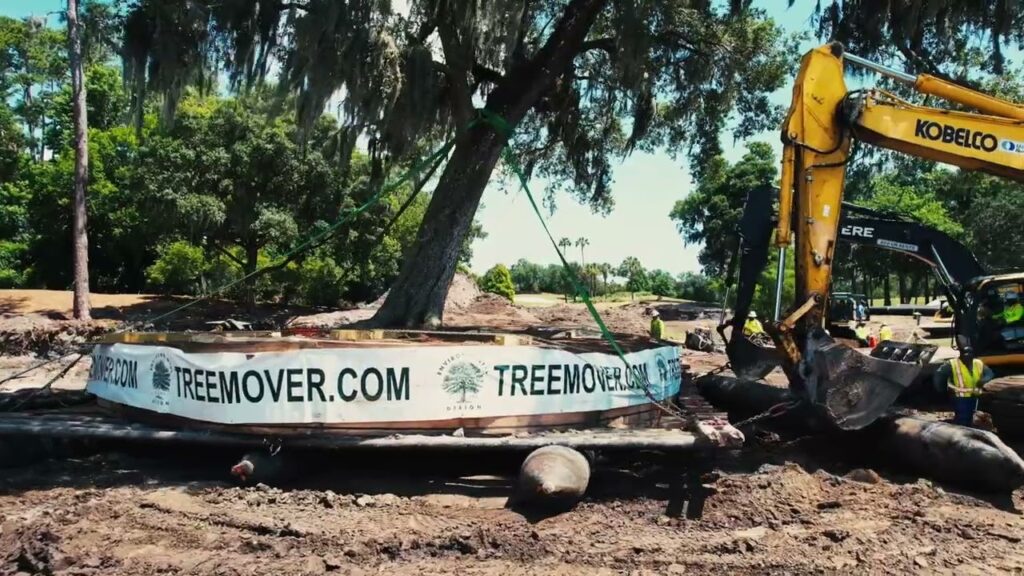
The larger trees are more difficult to move. For them, Cox digs a large trench around the base of the tree and inserts a lifting platform under the tree's root system. The platform is then attached by cable to a crane, which lifts the tree out and places on a flatbed truck. Depending on the size of the tree, a removal job can cost hundreds of thousands dollars, according to Environmental Design.

A three-year job

The World Trade Center Memorial will keep Cox's team busy for next three years. "A lot of work will go into selection of the trees for the memorial, and we chose Environmental Design because of their experience in projects such as this one," said Lynn Rasic, spokeswoman for the World Trade Center Foundation, a nonprofit agency that will build, own and operate the memorial and museum at Ground Zero.

Under the contract, Cox's team will select most of the 400 trees from Pennsylvania, New York and the Washington, D.C., area, where the 2001 terrorist attacks took place.

The company then will set up a nursery in New Jersey, just miles away from the memorial in the Lower Manhattan, where the trees will be cultivated for two years to a standard of 30 feet tall. It will take almost a year to move the trees to the site before the official inauguration in 2009.

A $10 million payday

Cox estimates the bill for his part of the project will be about $10 million. Designed by architects Michael Arad and Peter Walker, the memorial will feature two voids where the World Trade towers stood with waterfalls cascading nearly 30 feet into reflecting pools below. Swamp white oaks will cover the eight-acre site, and sweet gum trees, known for turning blood-red in the fall, will surround an opening on the southwest side, which will be used for ceremonies.

"The trees express the idea that we are all alive, and life goes on," said Doug Findlay, a partner at Peter Walker & Partners that has previously worked with Environmental Design on the Nasher Sculpture Garden in Dallas.

Trees that can survive

Cox said oak and sweet gum are among the few trees that are able to survive a dense urban setting and chilly winters of the Lower Manhattan. He said his transplants' survivability rate is typically about 98 percent. "I would consider that to be the most important landscaping job going on on the planet," Cox said.

NOTE: There are other types of media to browse for this article. Please click any icon on the right to explore further.


Treemoving Company Specializing In Tree Transplanting Projects And Services